

Spicy Purple Kimchi
Kimchi is a traditional Korean dish made from fermented vegetetables. Kimchi has a tangy, slightly spicy flavour and is a good side to a lot of dishes. Fermented food is awesome for your digestive system, because it helps the friendly bacteria in our digestive system to stay in balance, which can help with all sorts of health conditions, especially digestive complaints like bloating.
I’ve been experimenting by making various fermented foods, and Kimchi is my favourites, mostly because it tastes good. I like to have a couple of tablespoons of kimchi with one of my meals most days and encourage my patients to do the same, as I am pretty excited about the benefits it offers.
I totally get that making your own fermented foods is probably a little daunting, it’s a bit time consuming (not every day though) and sounds weird if you haven’t heard of the concept before – but it’s worth it!
When you ferment vegies, you get a whole heap of benefits:
- The food becomes more digestible
- The vitamins are heaps easier to use by the body
- More enzymes are produced, which help digestion
- Your gut’s good bacteria increase, which means better digestion and better immune health
- Fermented foods help clear out unwanted heavy metals such as mercury and aluminium
- Fermented foods promote an alkaline environment, which is important for general health
- Fermentation is a natural preservation technique, and is actually the only method that doesn’t kill off nutrients in the process.
Ingredients:
Day 1:
- Sea salt (not table salt)
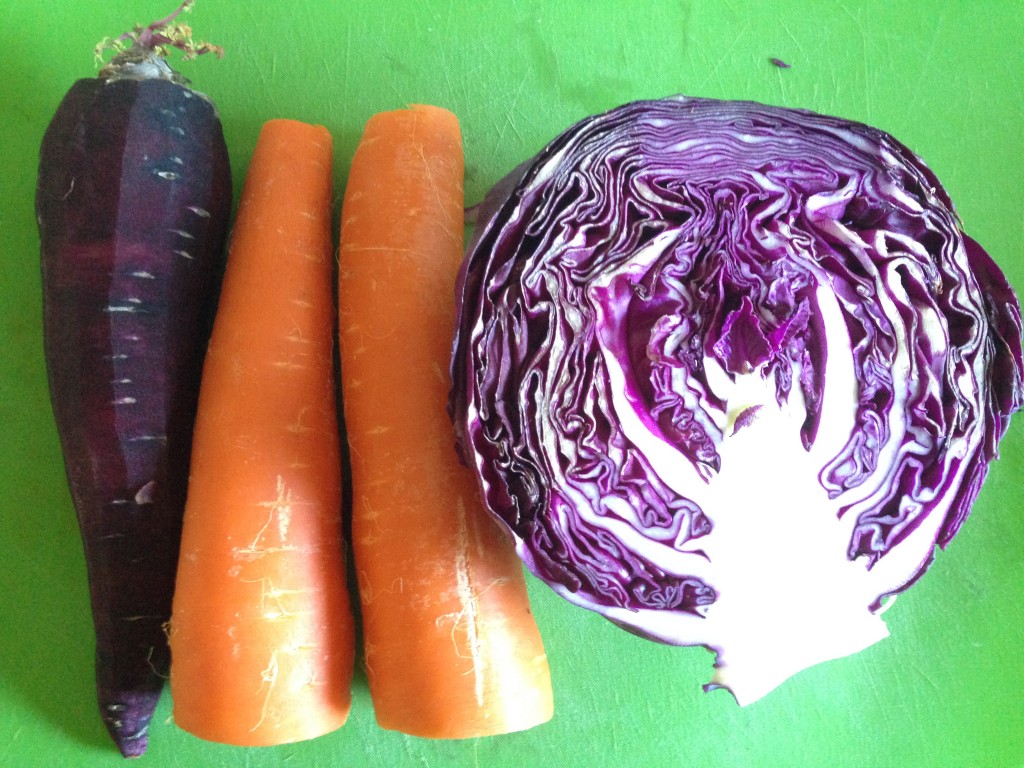
- Half a purple cabbage (normal cabbage is fine, I just like the colour)
- 3 carrots (i used a combo of orange and purple carrots)
- Optional – other vegies can include beetroot, green beans, radishes, seaweeds
Day 2:
- 1 red onion
- 1 red chilli, seeds removed and finely chopped
- 8 cloves of garlic, finely chopped
- 3 tbsp freshly grated ginger
- Spices, e.g. cumin, coriander, turmeric, caraway, fennel.
How to:
Prepare the brine by mixing approximately 1 tbsp salt into 1L of filtered water, stirring to dissolve. You want it to be salt, but palatable. If you are not using whey, you may need to add more salt to preserve it until the fermentation process starts.
Thinly slice the cabbage using a mandolin or a slicing attachment on the food processor, and either grate, or quarter and thinly slice the carrot. Submerge these vegies (along with any of the other vegies with the exception of garlic and onion) in the brine and allow to soak overnight. You can put a smaller plate on top of the vegies and weight it with a can to ensure they’re fully submerged.
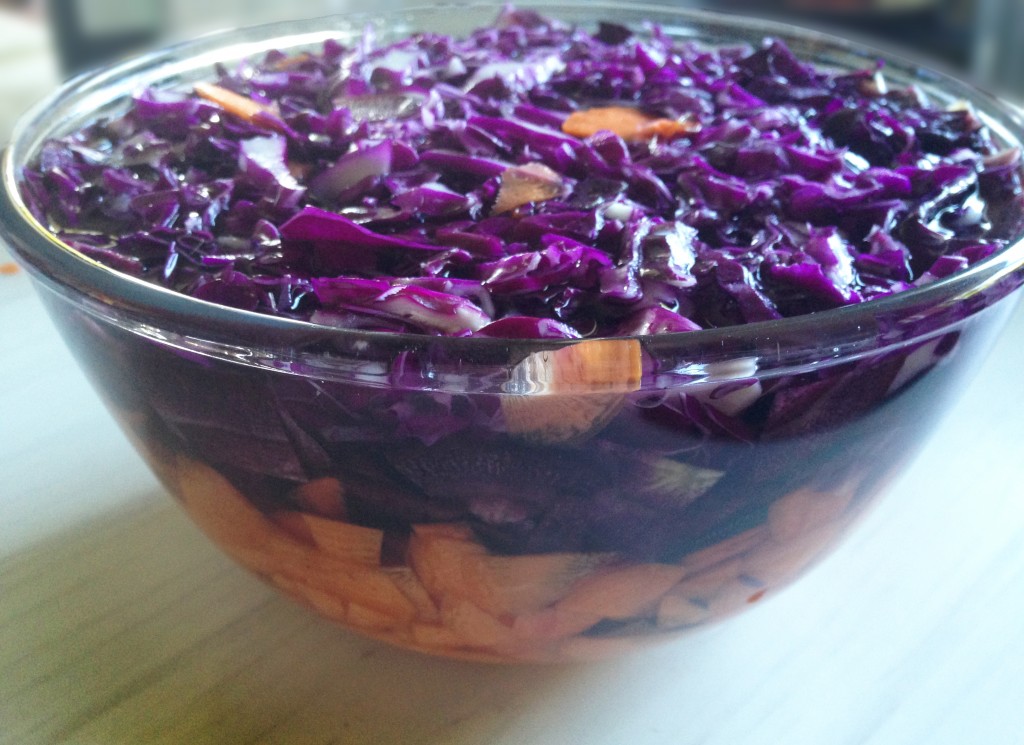
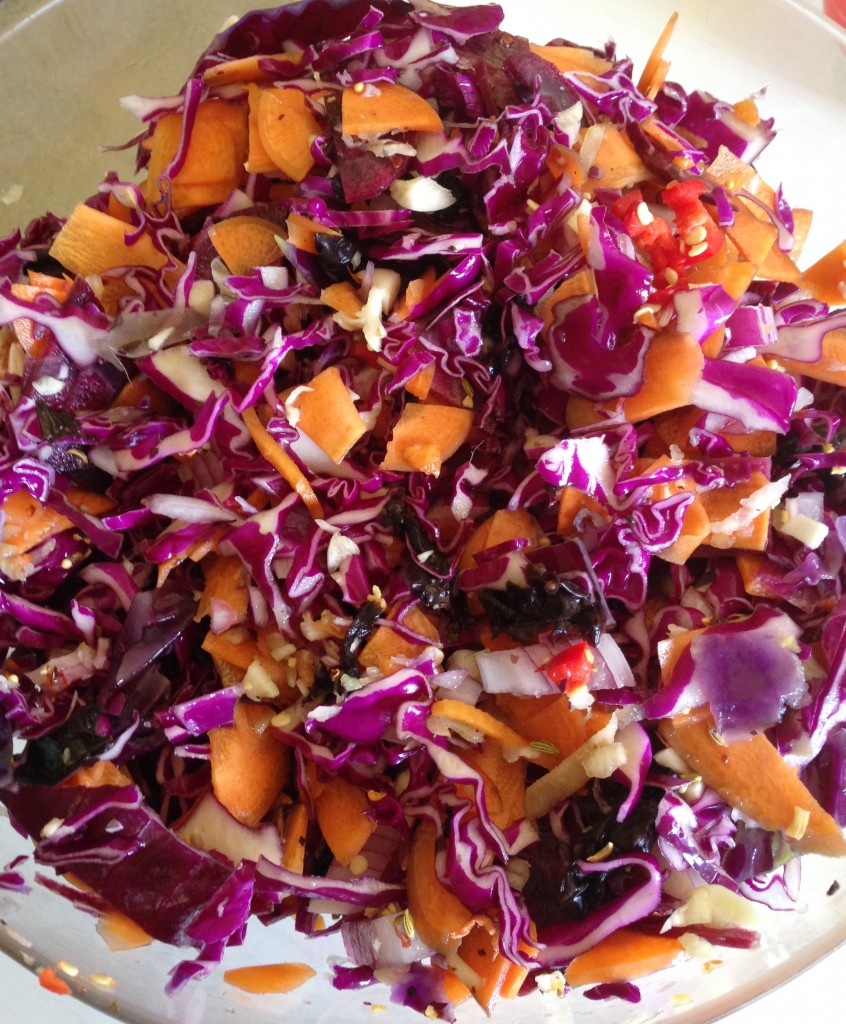
The next day drain the soaked vegetables (reserving the brine) and mix through the chopped garlic, ginger, chilli, onion and a generous amount of spices of your choosing to the kimchi.
In the mean time sterilise 2 large jars with boiling water and allow to air dry.
Pack the combined vegies into the jars, pressing down firmly and adding more brine if needed to submerge the vegies fully. Close or cover the jar with muslin or a clean tea towel and then let it sit in a warm place. Snap lock jars work best for storing fermented foods, but a screw top jar will be fine. If you close the lid of the jar rather than cover with cloth you may need to ‘burp’ (open) the kimchi every few days to let out some pressure.
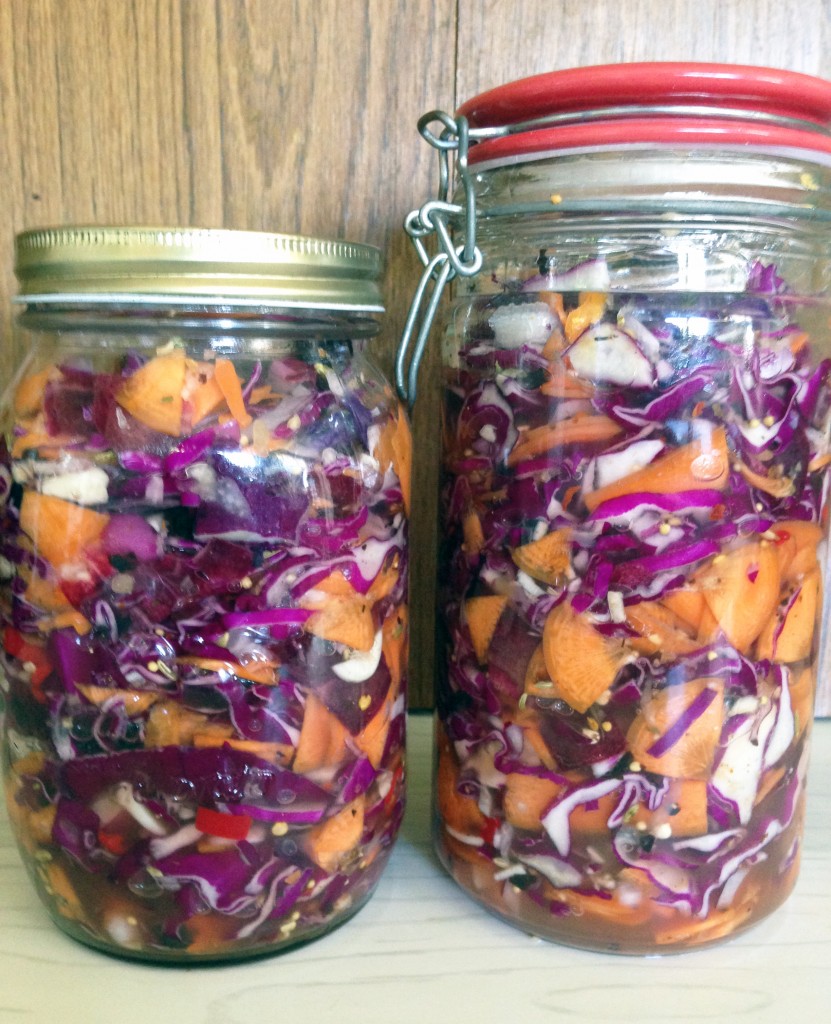
It usually takes about a week for the fermentation process to complete – you know it’s worked when the vegies taste ‘ripe’ and have a sharp acidic smell, but it shouldn’t smell off. It’s a good idea to check the vegies every 1-2 days so that you don’t let it go too far. Once it’s complete, seal the jar and store in the fridge. You can eat it straight away or store for a few months.
[fb_button]