The Importance of Chewing
[fb_button]
Mahatma Gandhi once said that we should “chew your drink and drink your food”. Even if chewing your food more was the only thing you introduced into your routine, you’d be pleasantly surprised the benefits your health and wellbeing would reap.
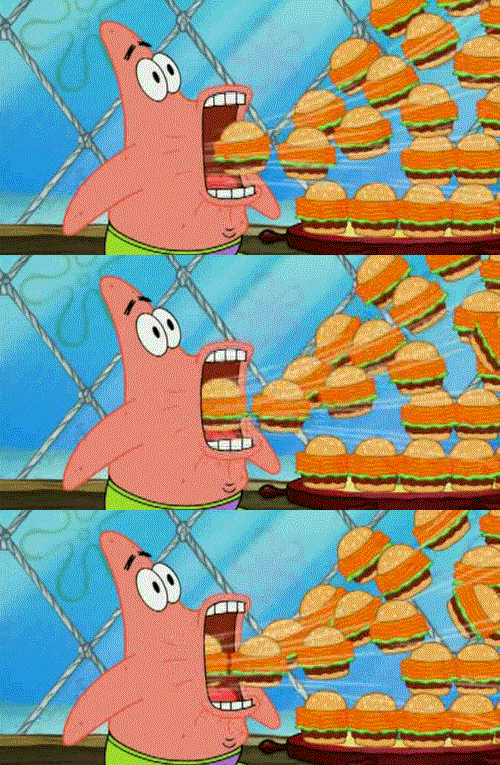
If you catch yourself inhaling food and swallowing food chunks the size of golfballs, it’s probably a good idea to slow down a bit, cut a small portion, and chew.
Digestion starts in the brain and the mouth, and if things aren’t going well here then it’s likely they won’t go too well further on down the digestive tract either. Chewing your food properly is one of the best ways to positively influence your digestive system, your dental health and your weight.
- Each time you chew you are sending a message to your brain that you are eating, and the more this occurs the more your brain responds by both producing more enzymes and acids to digest your food, but also by producing hormones that tell you that you are full. Not chewing properly can mean you’re often hungry after you’ve eaten.
- Chewing more means it’s less likely that you will eat mindlessly. By forcing yourself to slow down you will be less likely to overeat, and you’ll also allow your body to send through the message that you’re full (which is often a slow to come message) before you’ve overstuffed yourself.
- Chewing your food well means less damage on the oesophagus – if you’re swallowing whole chunks of food it can damage the delicate tissue in this area. By chewing properly you’re also lubricating the food with saliva, making its journey down to the stomach an easier passage.
- Saliva contains several enzymes that kickstart the digestive process. Fat digestion begins with saliva, and there are also enzymes that break down starches into sugar. You can experiment on this by chewing a plain cracker for a long period – it will transform from a savoury snack into sweet!
- The more you chew your food the more surface area you are creating, which means the digestive acids and enzymes will have an easier time breaking your food down even further.
- If your food is not chewed properly this acts a food source for the unfriendly bacteria in your digestive tract, allowing them to grow and crowd out your good bugs.
- Chewing is important for your teeth. It helps to keep your jaw and gum muscles strong, and the saliva produced is also important in controlling the bacteria in your mouth.
You should aim to chew each mouthful 25 times, or at least until it becomes a paste. For soups and drinks you don’t have to worry about the 25 count, but do give it a few chews to ensure the enzymes are working and to stretch out those jaw muscles.
This can be a hard thing to remember to do, so I often suggest to my patients to set a reminder in their phones to go off before their regular meal times “Remember to Chew!” and if possible to avoid eating while in a hurry, because this will mean you’re more likely to gobble down your meals.
Give chewing more a go, and let me know if you notice a difference!
[fb_button]