How to Calm your Inner Water
Each of the elements are associated with different aspects of health and nature. The balance of these elements in our body can help us maintain good health and a sense of wellness.
Continuing the mini-series of the elements we now move onto the element water.
To learn about elemental eating you can listen to my latest podcast about Elemental and Intuitive eating here.
Read about constitutional medicine here.
Read about the element of fire here.
Understanding Water
- The water element relates to the season of Autumn and is associated with the colour blue.
- This element is associated with the kidneys, lymph and stomach.
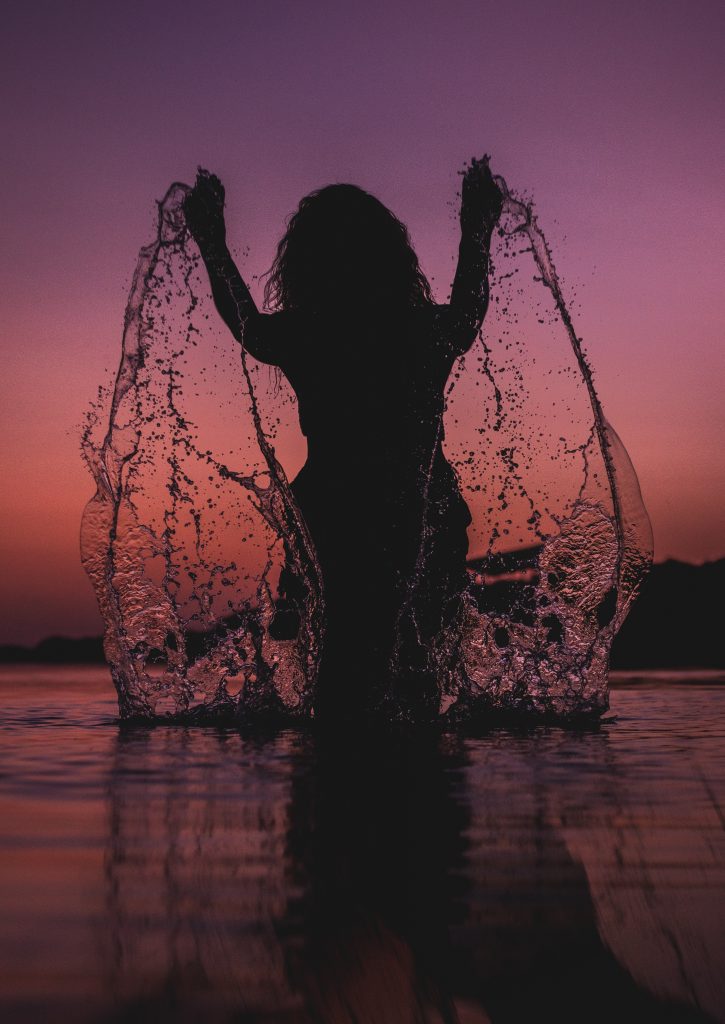
- Water in nature can be soothing, calming, serene and peaceful like a lake when undisturbed but just like the ocean when a storm is in action the waves can be turbulent.
- When out of balance a person may become irrational and unable to grasp the “reality” of a situation due to being overwhelmed with their feelings and emotions.
Water Constitution Characteristics
In traditional Ayurvedic medicine a water type is a fusion of a Kapha/Pitta dosha. Water is interchangeable in nature and due to this the physical attributes can differ between individuals.
If you are a water type you may have soft and moist skin, a teardrop shaped body and might find that you accumulate excess fluid in your tissues. Your face might be round in shape with large eyes and you may have thick luscious hair. On the other hand you may be thin in physical structure
and find that you are very sensitive to outside energies with your emotions
running frequently high. People may comment saying that your voice is a sweet, soft and has a gentle tone. Your personality will usually be kind and compassionate
Water is yin in nature and individuals governed by the water element are emotionally connected to their feelings and are very empathic to humans as well as animals. If you are a water type you may struggle to have relational boundaries. It is important that you protect your own emotional wellbeing by being consciously aware of not taking on other people’s energy.
For those who are dominant in the water element it can also affect their physical body, especially in the way that it holds onto water causing ‘damp’. You may experience difficulty holding onto water – damp relaxation, or a stagnation of tissues – damp stagnation.
Energetically a water dominant tissue state is either damp relaxation or damp stagnation. If you are in a damp relaxation state your pores may be open with a flux of fluids pouring out (such as profuse sweating, frequent urination or discharge) or if you are more damp stagnation in state you may find that fluids build up in your body as they are not flowing and are “stuck”.
How does the element of water show up in your body?
The body expresses excess water in the following signs and symptoms:
- Sensitivity to cold temperatures
- Clammy skin
- Wet cough with mucus
- Runny nose
- Excessive sweating
- Pus accumulation
- Oedema
- Lymphatic swelling
- Puffy, swollen arthritic joints
- Excessive urination
- Lowered immunity
- Weeping eczema
- Diarrhoea
3 tips to balance excess water:
- Avoid foods that are sweet and salty in taste. Instead consume foods that are pungent, aromatic and spicy to warm and stimulate the body into a more balanced state such as cinnamon, ginger, garlic, horse radish, rosemary and chilli. To reduce oedema from built up fluids consume diuretic foods such as carrot, celery, parsley, coriander, beans, cranberries and pomegranate.
- Drink herbal teas that have an astringent and expectorant action to
reduce excess fluids from your body such as Alchemilla officinalis (Lady’s Mantle), Achillea millefolium (Yarrow), Agrimonia eupatoria (Agrimony), Angelica archangelica (Angelica root), Cinnamomum cassia (Cinnamon) and Rubus idaeus (Raspberry leaf). - To balance out your yin nature, practice yang forms of movement such as hatha vinyasa yoga, HIIT training, boxing and running.