

PMS
PMS – A normal part of a woman’s life or something that can be helped?
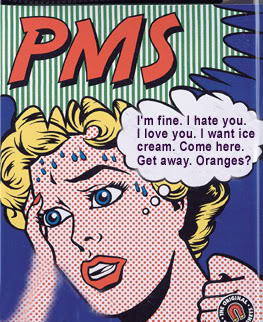
PMS stands for Pass My Shotgun, Pardon My Sobbing, Perpetual Munching Spree, Pimples May Surface…
PMS jokes are everywhere, as it is probably the most common female hormonal disorder. Many women accept monthly changes to their mood, appetite, energy and sleep patterns as an annoying but inescapable part of life, and yet PMS is a treatable condition. In Australia, it is estimated that up to 75% of women experience PMS at some time in their lives, with 18% of women suffering the more severe form – premenstrual dysphoric disorder (PMDD). PMS and PMDD are often poorly recognised, let alone diagnosed or treated.1 These conditions can have a severely detrimental effect women’s lives, but PMS can be easily and effectively treated with diet, exercise and Natural Medicines.
What causes Premenstrual Syndrome?
As you would expect, most of this havoc is due to hormonal imbalance, however very commonly it is existing nutritional deficiencies, as well as diet, stress and exercise combined, that really tips you over the edge.
Studies have shown that women who experience PMS have excessive amounts of oestrogen which causes relatively lower levels of progesterone compared to women who don’t2. Not everyone is the same of course, and some women may have low progesterone but not necessarily excess oestrogen.
The psychological symptoms
 Progesterone has a metabolite called allopregnanolone, which acts in the Central Nervous System by interacting with the sedating GABA A receptors to positively affect mood and behaviour, whilst improving stress response and cognitive function.3
When progesterone and its metabolites are low, less of the calming effect from the GABA receptors are experienced so you can experience all sorts of mood imbalances such as irritability, anxiety or depression. On top of this, oestrogen has excitatory effects in the CNS by acting on the glutamate system, so women with excess oestrogen often feel wound up and irritable. 4
The physical symptoms
A common complaint with PMS is fluid retention. High prolactin (another reproductive hormone) is associated with cyclic breast tenderness and fluid retention. Prolactin naturally elevates during the second half of your cycle and may be further increased by stress, low blood sugar and high oestrogen. Aldosterone (a hormone produced by the adrenal glands) also contributes to symptoms of fluid retention, contributing to weight gain and bloating. Stress is the key driver of high aldosterone. Interestingly, stress may also reduce your sensitivity to progesterone.5 Another relatively common symptom accompanying this time is latent virus activation e.g. getting cold sores at that time of the month.
What can we do about it?
The specific treatment varies on the woman as everyone experiences PMS differently. The core focus is to use nutritional supplements and herbal medicine which can help to balance hormones, support stress levels and reduce unpleasant symptoms. In clinic I use high strength herbal medicines which includes use both liquid and tablet forms, all of which are stringently tested for quality, safety and the strength of the active parts. Working towards a healthy eating (diet) and balancing lifestyle factors (e.g. reducing stress) is important as well.
One of the main herbs Naturopaths use for treating PMS is Vitex (Vitex agnus castus, also known as Chaste tree). It is best taken first thing in the morning for two or three months to see results. Various studies have demonstrated that Vitex supplementation significantly improves the spectrum of premenstrual symptoms over a period of three months. One study showed that symptoms of irritability, breast fullness and bloating were improved by 50%,6 whilst another found that 93% of 1634 participants reported an improvement or complete remission of symptoms monitored, including depression, anxiety, food cravings and fluid retention.7 Furthermore, by normalising the luteal phase, Vitex has been shown to improve fertility in women with luteal phase defect.8 In a study on infertile women with pathologically low progesterone levels, a dose of 36 mg of dried fruit daily improved fertility rates by approximately 15% within three months.9
Peony (Paeonia lactiflora) and Dong quai (Angelica sinensis) are also great hormonal regulators specific for PMS and menstrual irregularities.10
To support mood and stress levels there are herbs that calm the nervous system and balance GABA levels such as Passionflower (Passiflora incarnata), herbs to support adrenal gland function such as Rehmannia (Rehmannia glutinosa) and Licorice (Glycyrrhiza glabra); and adaptogens – herbs that help you ‘adapt’ to stress such as Siberian ginseng (Eleutherococcus senticosus) and Withania (Withania somnifera).
To further support your nervous system it’s important to ensure you don’t have nutritional deficiencies that will leave your nervous system frazzled. For example, B vitamins and magnesium are crucial for combating stress and so many people are deficient these days. Your body uses more of these when you’re stressed so if you lead a stressful, busy lifestyle at times then you most likely need top up with some supplements to get you back on track.
As well as having a diet that is high in protein, fibre and good fats (these are all crucial!), there are key nutrients that are needed for blood sugar regulation, such as chromium and magnesium, to improve carbohydrate metabolism and blood sugar control.
Vitamin B6 – for production of neurotransmitters, essential fatty acid metabolism, oestrogen metabolism, and progesterone support.
Magnesium – to reduce cramps, to support mood, for blood sugar control, to reduce aldosterone, and support energy production. Intracellular (but not plasma) magnesium levels have been found to be lower in women with PMS, so women who are deficient in magnesium are more likely to suffer from PMS.
Calcium – this is also important for nervous system support, and to regulate the control of muscular contraction and relaxation. Interestingly, symptoms of calcium deficiency are similar to many PMS symptoms and in some women PMS may be due to underlying calcium dysregulation which may be driven by vitamin D deficiency.
Chromium – essential for blood sugar level control, insulin production and pancreatic health. Chromium deficiency can lead to more sugar cravings and blood sugar fluctuations.
Omega fatty acids – Omega 3 is important for healthy prostaglandin levels, and a deficiency of Omega 3 can cause a variety of symptoms such as menstrual and premenstrual cramps, depression, irritability, dry/rough skin, acne and cravings for oily and fried foods.
If you’re someone who really suffers in the lead up to your period each month, it’s certainly worth getting some professional advice from a naturopath about the key elements of treatment for you. It’s something that many women seem to think they just have to endure and put up with, without looking into ways they could reduce their symptoms. If you’re one of those people – now you know there are things you can do, so why not give naturopathy treatment a try?

READY TO DISCUSS YOUR HEALTH NEEDS?
CONTACT ME TO MAKE AN APPOINTMENT
1. Halbreich U, Borenstein J, Pearlstein T, Kahn LS. The prevalence, impairment, impact and burden of premenstrual dysphoric disorder (PMS/PMDD). Psychoneuroendocrinology 2003; 28(3): 1-23.
2. Wang M et al. Relationship between symptom severity and steroid variation in women with premenstrual syndrome: study on serum pregnenolone, pregnenolone sulfate, 5a-pragnane-3,20-dione and 3a-hydroxy-5a-pregnan-20-one. J Clin Endocrinol Metab 1996; 81: 1076-1082.
3. Monteleone P et al. Allopregnanolone concentrations and premenstrual syndrome. Eur J Endocrinol 2000; 142: 269-273.
4. Backstrom I et al. Pathogenesis in the menstrual cycle-linked CNS disorders. Ann N Y Acad Sci 2003; 1007: 42-53.
5. Kumar S, Mansel RE, Scanlon MF, Hughes LE, Edwards CA, Woodhead JS, Newcombe RG. Altered responses of prolactin, luteinizing hormone and follicle stimulating hormone secretion to thyrotrophin releasing hormone/gonadotrophin releasing hormone stimulation in cyclical mastalgia. Br J Surg 1984; 71(11):870-3.
6. Loch EG et al. Treatment of premenstrual syndrome with a phytopharmaceutical formulation containing Vitex agnus castus. J Womens Health Gend 2000;9(3):315-20.
7. Berger et al. Efficacy of Vitex agnus castus L. extract Ze440 in patients with premenstrual syndrome. Arch Gynecol Obstet 2000; 264 (3): 150-3.
8. Wuttke W et al. Chaste tree (Vitex agnus-castus)- pharmacology and clinical indications. Phytomedicine 2003; 10(4): 348-57.
9. Bone K. Clinical Guide to blending liquid herbs. Churchhill Livingstone 2003, p 145.
10. Sakamoto S et al. Pharmacotherapeutic effects of kuei-chih-fu-ling-wan on human uterine myomas. Am J Chin Med 1992; 20 (3-4): 313-7.
[fb_button]