

Spices show promise in anti-cancer properties
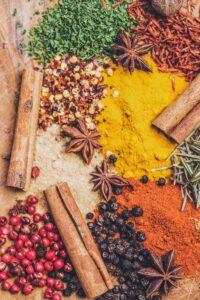
This study was the first to suggest that curcumin (the main phytochemical from turmeric) and piperine (from pepper) could reduce the risk of cancer by targeting stem cells. Based on the hypothesis that malignancies arise in tissue stem cells, limiting the number of stem cells may mean that the number of cells with potential to form tumours is also limited.
To investigate the effects of curcumin and piperine on breast stem cell markers and signalling pathways in vitro, investigators used doses that were 20 times the potency available in food. The equivalent doses are possible to achieve with dietary supplements.
The results showed that curcumin and piperine, administered both separately and in combination, decreased the number of stem cells while having no effect on normal differentiated cells. Being selective to cancer stem cells and having low toxicity means these substances have a possible future in breast cancer prevention.
Kakarala M, Brenner DE, Korkaya H, Cheng C, Tazi K, Ginestier C, et al. Targeting breast stem cells with the cancer preventive compounds curcumin and piperine. Breast Cancer Res Treat 2009 Nov 7.
Curcumin’s Potential in Oesophageal Cancer
The survival rate for oesophageal cancer is low while its incidence is increasing. This study assessed the effect of the natural phytochemical curcumin on a panel of oesophageal cancer cell lines. Of particular interest was the mechanism by which it exerted its purported anti-cancer effects, whether by promotion of mitotic catastrophe, apoptosis or autophagy.
The curcumin treatment reduced all cell line viability within 24 hours of treatment. The predominance of a non-apoptotic form of cell death was observed with features of mitotic catastrophe and autophagy apparent.
Curcumin appeared to affect a key cell cycle checkpoint regulator in curcumin-responsive oesophageal cancer cells, disrupting mitosis and producing cytotoxic effects. Thus, curcumin represents a promising anticancer agent for prevention and treatment of oesophageal cancer.
O’Sullivan-Coyne G, O’Sullivan GC, O’Donovan TR, Piwocka K and McKenna SL. Curcumin induces apoptosis-independent death in oesophageal cancer cells. Br J Cancer 2009;101(9):1585-1595.